Description
Specifications
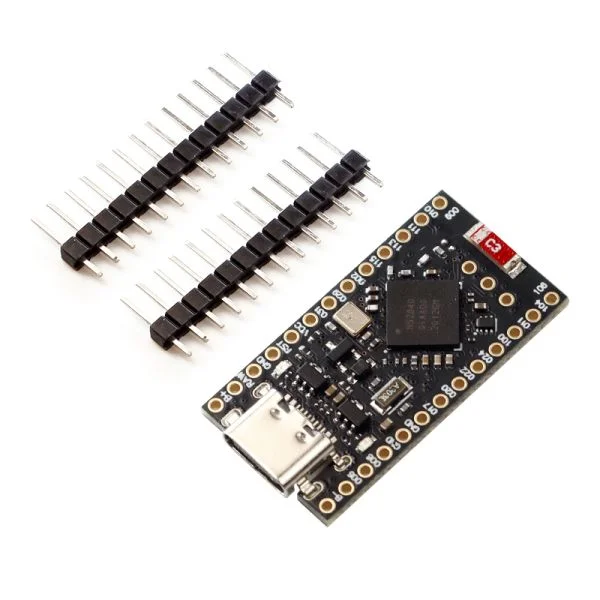
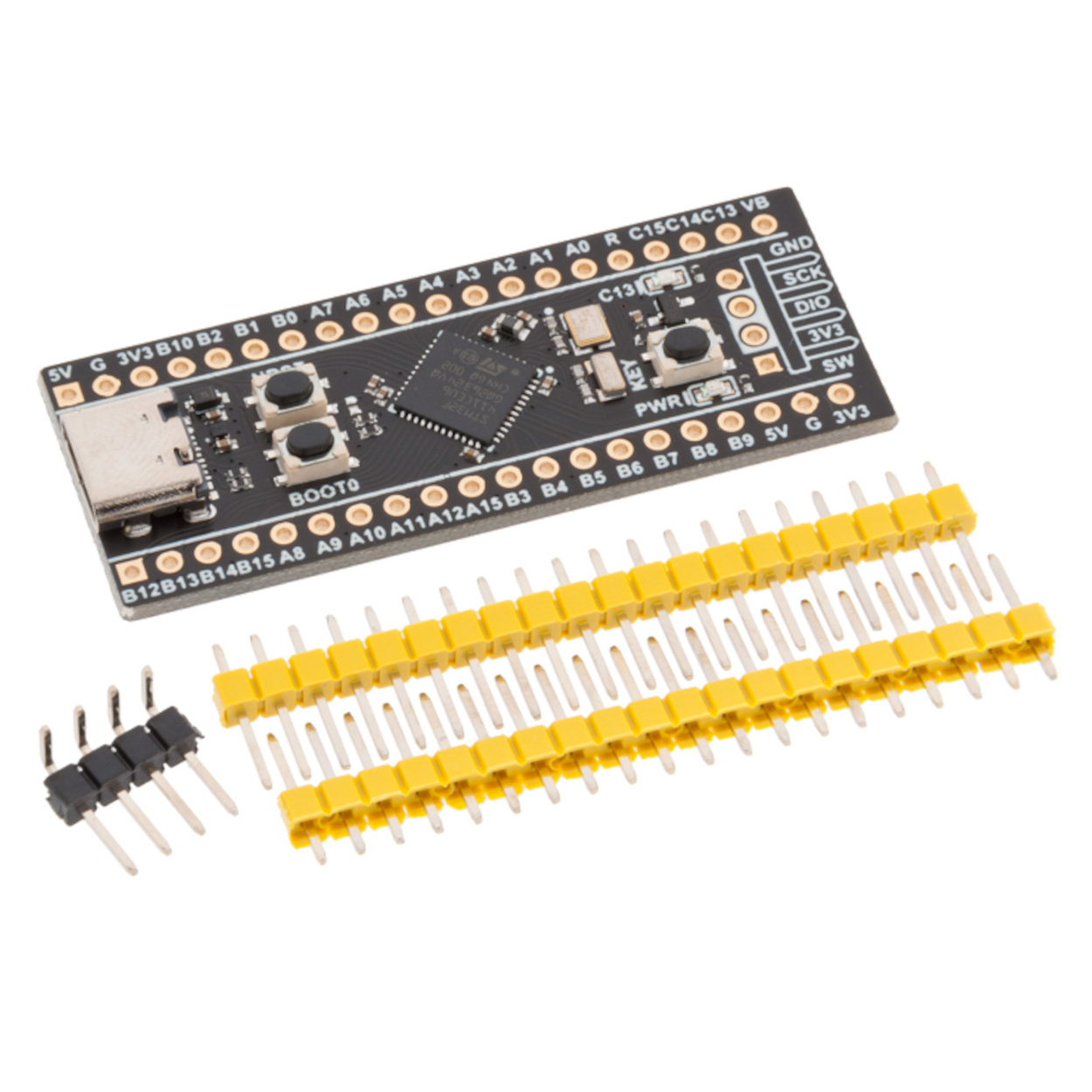
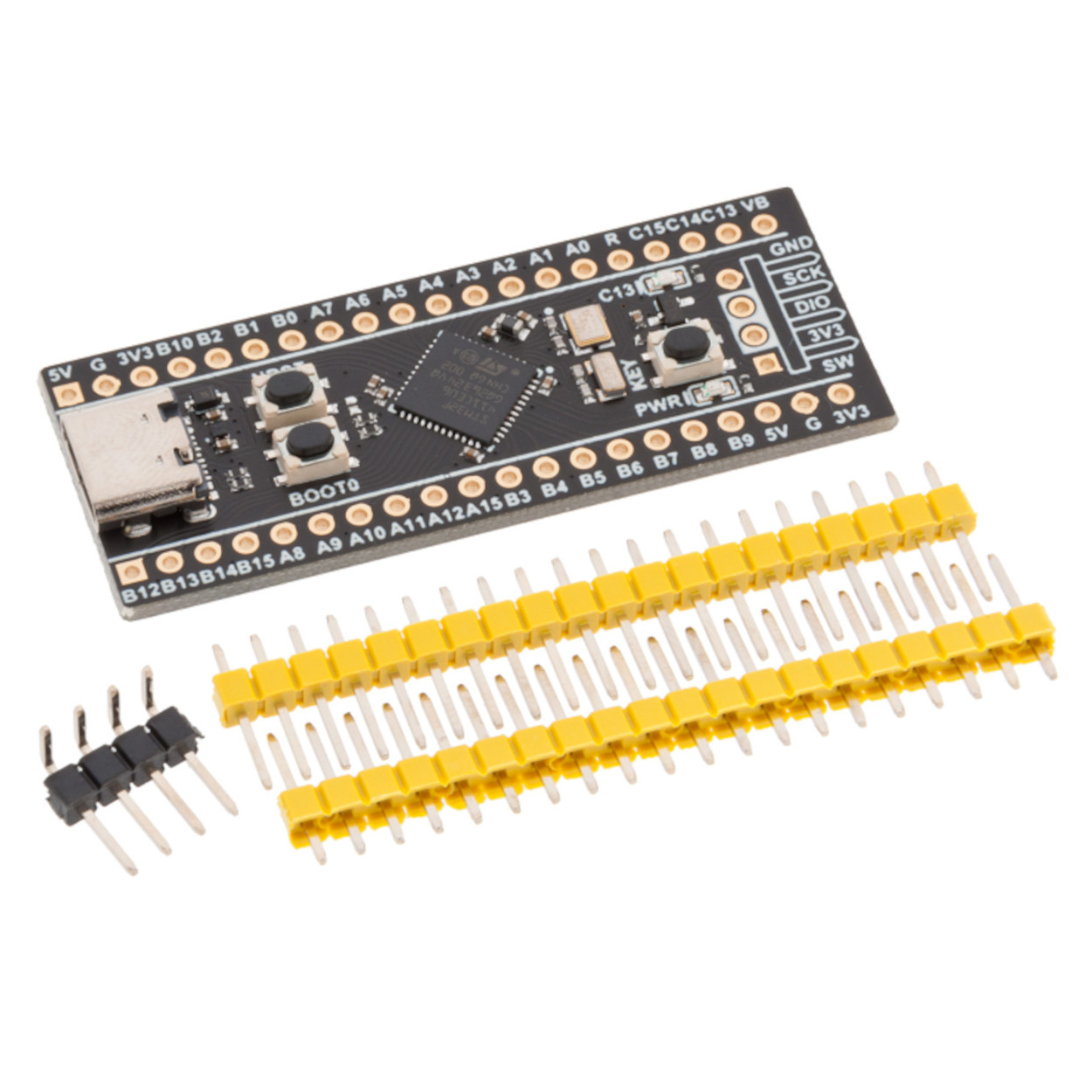
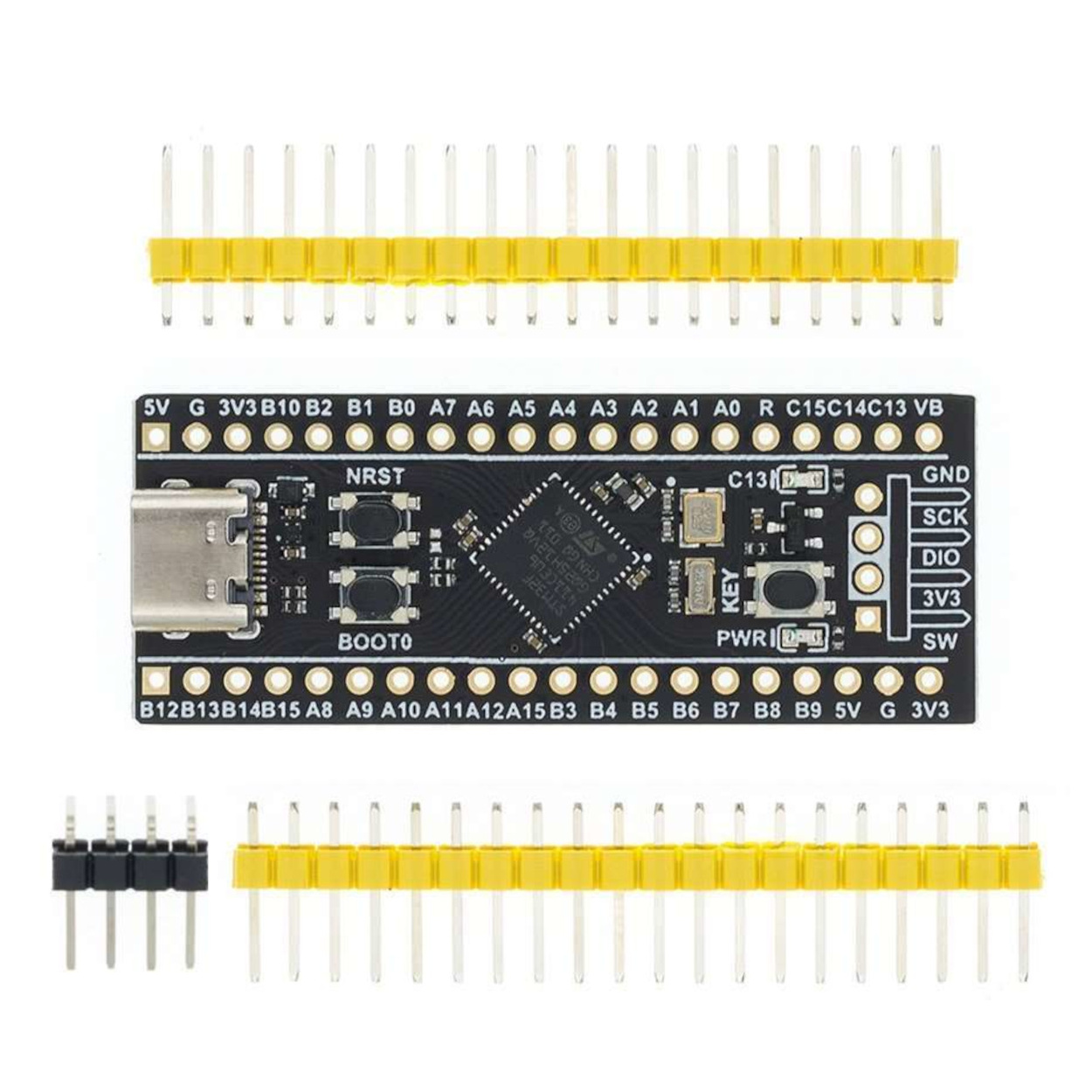
- Microcontroller: STM32F411CEU6 (ARM Cortex-M4 32-bit RISC core)
- Clock Speed: 100 MHz
- Flash Memory: 512 KB
- SRAM: 128 KB
- Floating Point Unit (FPU): Single-precision hardware FPU
- Connector: USB Type-C (Robust power & programming interface)
- Debug Interface: SWD (Serial Wire Debug) header for ST-Link
- Crystal Oscillators: 25 MHz High-Speed External (HSE)
- Crystal Oscillators: 32.768 kHz Low-Speed External (LSE) for RTC
- Buttons: 1 x Reset (NRST), 1 x Boot (BOOT0) for DFU mode
- User LED: PC13 (Active Low)
- Power Supply: 3.3V LDO onboard (Input 5V via USB or VIN)
- USB Interface: Type C
Applications
This board is a favorite among engineers for tasks that require real-time processing and DSP capabilities:
- Flight Controllers (Drones): Handles complex stabilization algorithms (PID loops) faster than 8-bit controllers.
- Digital Signal Processing (DSP): Perfect for audio analysis, FFTs, and digital filters.
- Advanced Robotics: Inverse kinematics for robot arms and hexapods.
- Sensor Aggregation: efficiently reading IMUs, GPS, and Lidars simultaneously viamultiple I2C/SPI buses.
- USB Devices: Can emulate HIDs (Keyboards/Mice) or MIDI devices.
Wiring Guide
Critical Safety Warnings:
- Logic Voltage: This is a 3.3V Logic device. While many pins are 5V tolerant, you should strictly use logic level converters when interfacing with legacy 5V sensors (like the HC-SR04 ultrasonic sensor old versions).
- USB-C Cable: Use a high-quality data cable. Many “charge-only” USB-C cables
will power the board but fail to recognize it for programming.
Programming Mode (DFU): To upload code via USB (without an ST-Link):
- Hold down the BOOT0 button.
- Press and release the NRST (Reset) button.
- Release BOOT0. The board is now in DFU mode.
Frequently Asked Questions (Technical FAQ)
Q1: Can I program this using the Arduino IDE?
A: Yes, by installing the STM32duino core in the Board Manager, you can program it just like an Arduino.
Q2: Does this board support MicroPython?
A: Yes, the STM32F411CEU6 is fully supported by MicroPython. You will need to flash the firmware first.